


How bioclimatic pergolas are transforming hotel terraces across Europe
The hospitality industry is undergoing a quiet transformation, not in lobbies or dining rooms, but outside, on terraces and rooftops where guests increasingly want to spend their time. From boutique hotels in the Alps to resort spas along the Adriatic coast, the bioclimatic pergola has become the go-to architectural solution for operators who need outdoor spaces that function in all weather, all year round.
Misteral: A certified pergola specialist for Central and Eastern Europe
For hotel and restaurant operators based in Central and Eastern Europe, choosing the right installation partner is critical. Misteral, based in Krško, Slovenia, is one of the region's leading certified pergola specialists, with over 3,500 completed installations and a dedicated team installing more than 400 structures per year. Their expertise covers both residential and commercial projects, with a strong track record in the hospitality sector across Slovenia, Croatia, and neighbouring countries.
What sets Misteral apart in the professional market is its engineering-first approach: each structure is specifically dimensioned to suit its installation environment, ensuring it is adapted to the local conditions and project requirements.
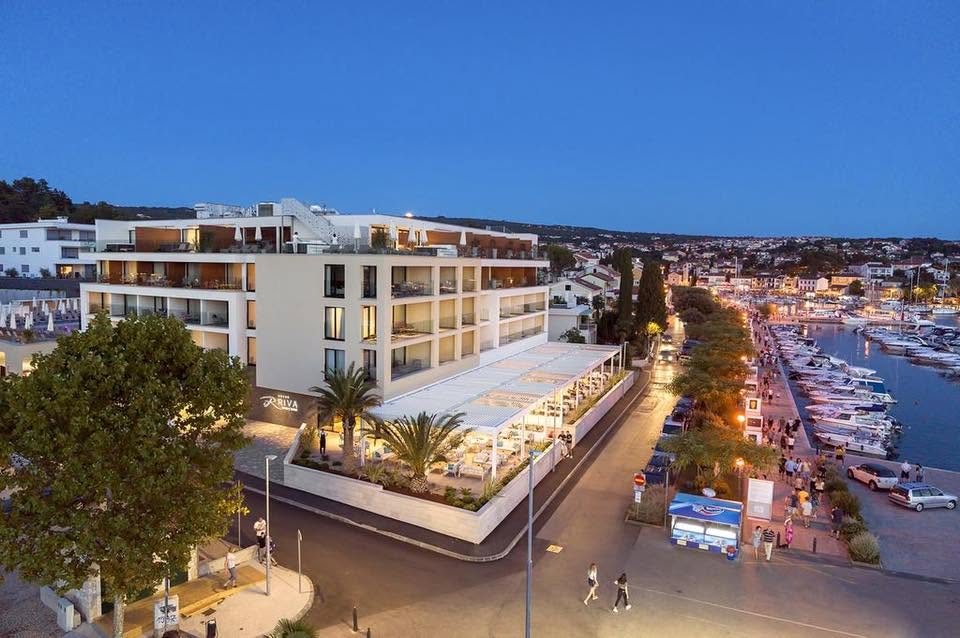
The technical requirements of a professional installation
Installing a bioclimatic pergola on a hotel property demands a significantly higher standard of execution than a residential project. Structures must often span large, irregular terraces; integrate with existing architecture without altering the building's visual identity; comply with commercial load regulations for wind resistance and snow; and support automation systems that non-specialist staff can operate reliably during service.
This is where the choice of installer becomes as important as the choice of product. Misteral, a Slovenian pergola specialist with an established track record in the hospitality sector, illustrates what expert installation looks like at commercial scale. Their work on hotel and restaurant projects across Central Europe reflects the level of technical expertise required to design and install structures that are dimensioned to suit their installation environment, ensuring they meet the specific requirements of each project.
Key technical criteria to discuss with your installer before committing to a project:
-
-Environmental constraints assessment: snow load, wind exposure, altitude, and site configuration communicated to Solisysteme so the pergola can be designed and configured accordingly
-
Wind resistance adapted to the site: Solisysteme and Misteral work together to ensure the structure matches every exposure conditions.
- Drainage integration to prevent standing water and leaks onto guests below, systems using patented gutter profiles rather than degradable rubber gaskets offer the best long-term performance
- Automation system compatibility with existing building management systems (BMS)
- Qualicoat-certified powder coating for inland installations, or Qualimarine certification for coastal environments
- Warranty terms : professional commercial installations should carry structural guarantees of at least 15–25 years; anything shorter signals a product that has not been engineered for longevity
Explore Solisysteme's full guarantees and labels to understand the certification standards behind every structure.
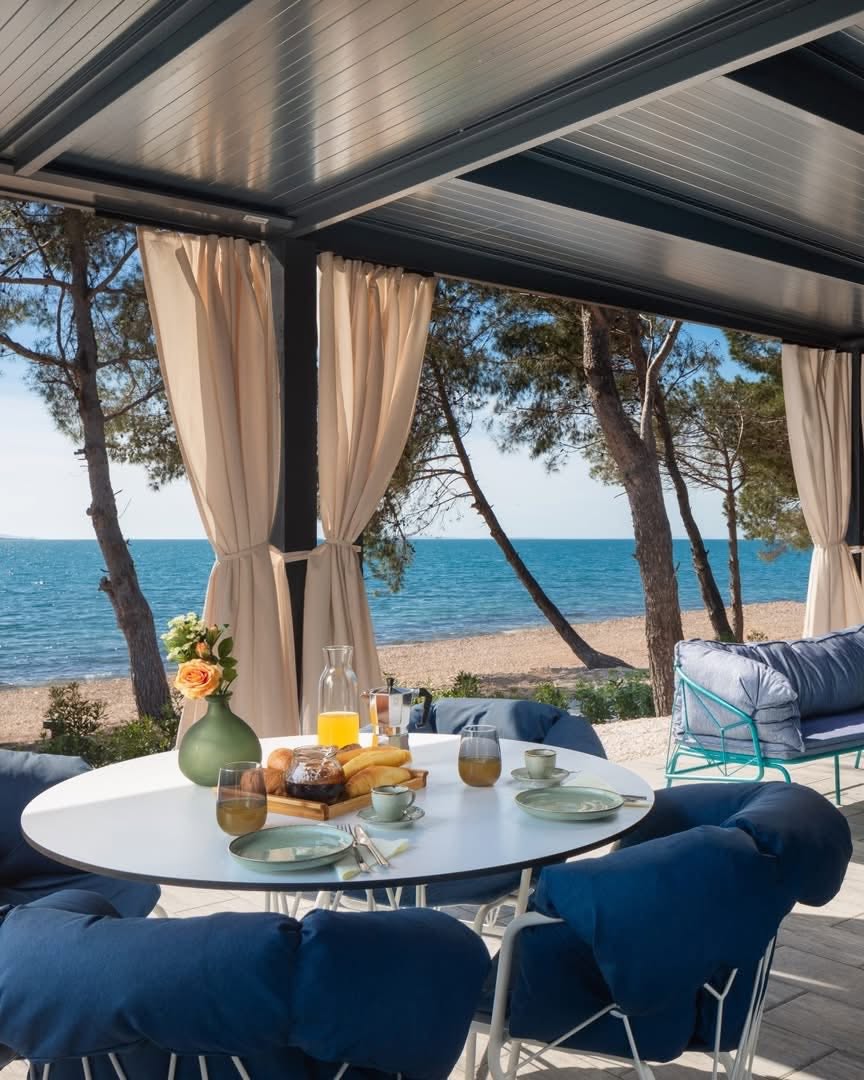
Technical features that matter for commercial hospitality projects
Misteral's bioclimatic pergolas are built with corrosion-resistant aluminium, stainless steel fittings, and marine-quality powder coating as standard — not as an optional upgrade. This level of finish is particularly relevant for hotel properties in coastal or high-humidity environments, where lesser treatments degrade within a few seasons and require costly maintenance.
Their structures are also dimensionally flexible: non-standard terrace shapes, irregular footprints, and architecturally constrained installations are handled as part of their core offering. You can explore Misteral's non-standard and specific projects to see how they approach atypical commercial installations. For operators who want to assess proportions and finishes before committing, Misteral offers a 3D pergola configurator with realistic visualisations that can be tailored to existing architecture.
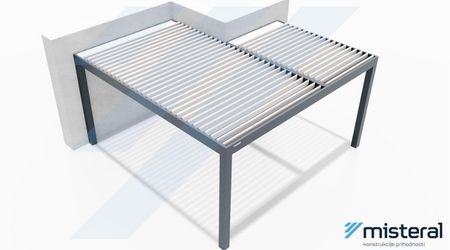
Design integration: The challenge hotels get wrong
The most common mistake in hospitality pergola projects is treating the structure as an afterthought, ordering a standard model and hoping it coordinates with the façade. A bioclimatic pergola installed on a four-star hotel property needs to feel intentional: right proportions, right colour, right profile depth relative to the building's architectural language.
Solisysteme's range of 27 standard structure colours, with full RAL options and woodgrain finishes available on request, was designed precisely for this kind of project. Structures can be specified to echo existing architectural lines, a stone-coloured finish on a traditional Alpine property, a RAL anthracite profile on a contemporary urban hotel or used to create a deliberately distinct outdoor identity: a signature terrace that photographs well, gets shared on social media, and supports direct bookings.
For branded hospitality spaces, pergolas can be tailored with a wide range of colours for both the structure and louvres, as well as configurable roof and enclosure options, including louvres, fabric, fixed roofs, glazing, sliding panels and vertical screens, allowing each installation to be customised to the project's architectural identity.
Browse Solisysteme inspirations for examples of how pergola structures have been integrated into diverse architectural contexts.
Working with Misteral: From first contact to completed installation
Misteral's commercial project process begins with a free consultation and on-site measurement a prerequisite for any professional installation given the structural calculations involved. Their in-house installation teams handle every stage from structural design to commissioning, without subcontracting. This means a single point of accountability for hotel operators managing complex refurbishment timelines.
For architects and project managers working on new-build or renovation projects, Misteral coordinates directly on technical specifications and construction integration. To initiate a project study or request a quote, visit their contacts page or send a direct inquiry. You can also browse their completed installations in the project gallery and the video gallery for a realistic sense of finish quality at scale.
All Misteral structures come with up to 25 years of structural warranty a commitment that reflects the engineering standards behind each installation and gives hotel operators the long-term performance assurance required when a pergola becomes a permanent, revenue-generating asset.
Year-Round outdoor dining: A case for the numbers
Restaurant and bar terraces attached to hotels present one of the clearest use cases for bioclimatic pergola investment. Guests want the outdoor experience; operators need protection from the elements. A well-designed bioclimatic structure with lateral ZIP blinds or sliding glass walls creates a space that retains the feel of al fresco dining while remaining sheltered enough to operate through rain, wind, and the cooler temperatures of spring and autumn.
The Solisysteme Pergola Solibio aluminium structure with motorised orientable louvres rotating up to 145°, one of the best opening angles on the market for bioclimatic performance, compatible with the full range of side closure options including ZIP blinds, sliding glass walls, and fixed aluminium panels is frequently specified for exactly this type of project. Combined with integrated LED lighting embedded in the profiles and Somfy RTS automation, it enables hospitality operators to create a distinct atmospheric sequence from morning breakfast service through to late-evening dining without any visible technical infrastructure.
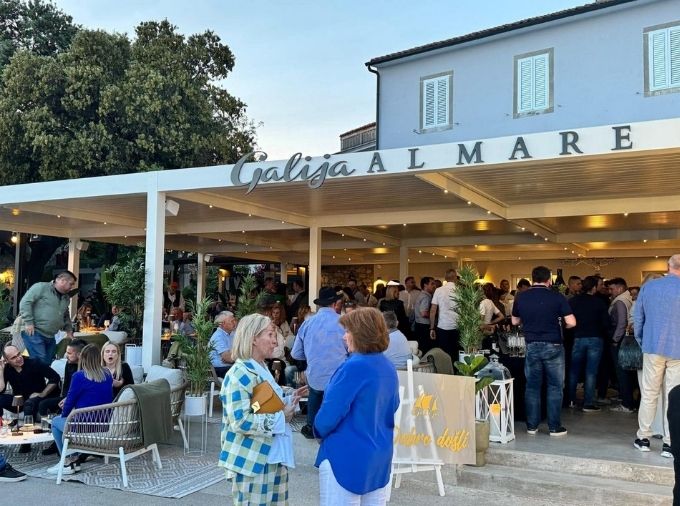
Choosing the right specification and partner
A bioclimatic pergola for a hotel or restaurant is not a commodity purchase. The right approach is to work with a manufacturer that offers genuine customisation, a certified installer network, and a commitment to site-specific structural calculations rather than off-the-shelf sizing.
Solisysteme has spent over 25 years building exactly this kind of expertise, manufacturing in France and distributing through a network of professional certified installers operating across Europe. Whether the project involves a single terrace extension or a multi-zone outdoor hospitality environment poolside bar, main restaurant terrace, breakfast courtyard the right specification from the outset determines whether a pergola becomes a long-term revenue asset or a maintenance problem.
Use the Solisysteme 3D configurator to begin visualising your structure, or request a free estimate from our team.

Contact Misteral for your hotel terrace project
Misteral certified bioclimatic pergola installer, Slovenia. Commercial and hospitality projects across Central and Eastern Europe.